Disruption to cellular trafficking in ALS and FTD caused by protein accumulation
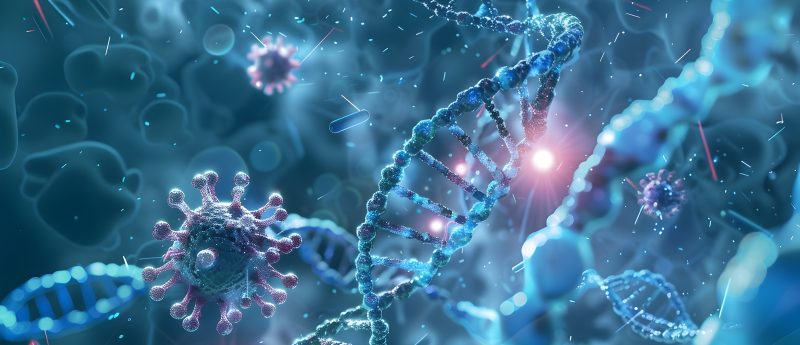
A highly detailed 3D rendering of a double helix human DNA in blue color, with small carbon elements and light effects on a dark gray-blue background. The image shows an angle of view of different
Researchers from Emory University School of Medicine (GA, USA) and Mayo Clinic (FL, USA) have identified a protein that appears to aggregate and disrupt cellular trafficking systems in amyotrophic lateral sclerosis (ALS) and frontotemporal dementia (FTD). Most cases of ALS are sporadic, whilst only a minority are solely caused by inherited mutations in the C9orf72 gene. Previously, this mutation was thought to influence the protein in question, TAR DNA binding protein-43 (TDP-43); however, this research suggests the protein is itself an independent perpetrator of disease pathology. TDP-43 is normally located in the nucleus, but in neurones affected by ALS, it...