Could Alzheimer’s disease be kick-started by periodontal bacteria?

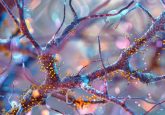
01062114 57 A vibrant 3D illustration of a virus with highlighted proteins, showcasing the focus on molecular biology and scientific research. --ar 16:9 --stylize 250 Job ID: 7a71ef47-d11c-422a-82c6-41d1bda9a69f
According to a new study from researchers at the University of Illinois at Chicago (IL, USA), long-term exposure to periodontal disease bacteria could cause inflammation and degeneration of neurons in mice that is similar to the effects of Alzheimer’s disease (AD) in humans. In the study, which has been published in PLOS ONE, the researchers tested a hypothesis that repeated exposure of wild-type mice to orally administered Porphyromonas gingivalis results in neuroinflammation, neurodegeneration, microgliosis, astrogliosis and formation of intra- and extra-cellular amyloid plaque and neurofibrillary tangles. “Other studies have demonstrated a close association between periodontitis and cognitive impairment, but this...