
Navigating schizophrenia: a journey from addiction to advocacy
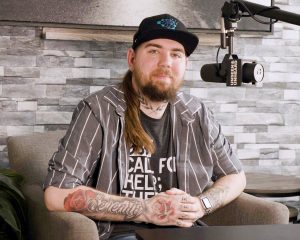 Kody Green is a schizophrenia advocate and full-time content creator, using social media platforms to help people better understand schizophrenia. Kody also hosts the ‘Unseen & Unheard’ podcast, where he talks to some of the millions of adults in the USA living with schizophrenia.
In this interview for Mental Health Awareness Month, we talk to Kody about his story, common schizophrenia misconceptions, his advice for healthcare professionals supporting people with schizophrenia and what he hopes for the future of his advocacy.
Please introduce yourself and tell us a bit about your story
I am a schizophrenia advocate and full-time content creator. I started talking about my experience with schizophrenia about 5 years ago on social media. My story with the illness started with my mom, who was diagnosed with schizoaffective disorder when I was in middle /high school. She started struggling with hallucinations, delusions and paranoia. We lived in a small rural area, and we didn’t really know what was going on. We had a lot of questions that we couldn’t get answered.
It wasn’t until just before I went off to college that we were able to get her a proper diagnosis and get her medication and stable. Then, in my first year of college, after I had finally moved out, I suffered a psychotic break. I started having some of the same symptoms, hallucinations, delusions and paranoia, which led to me falling into addiction and eventually being incarcerated. It took years for me to get stable on medication and get to a point where I felt comfortable talking about what I had been through and sharing my story with schizophrenia. Then, I started using social media as a way to talk about not just my story, but what the illness is and trying to help people better understand it.
Why do you think being a schizophrenia advocate and more broadly a mental health advocate is important?
I think there are still a lot of misconceptions and stigma about mental health, specifically mental illness and schizophrenia. I realized it when my mom was diagnosed, but it became more evident when I was diagnosed, and I started seeing how people spoke about mental illness and how people reacted to my diagnosis. Schizophrenia has been such a big part of my life, not just as a patient, but as someone who was a caregiver for schizophrenia, and I just saw a lot of misconceptions whenever the conversation would come up with other people. There are misconceptions that people with schizophrenia are somehow inherently dangerous, and people also mix up schizophrenia with dissociative identity disorder, which used to be known as multiple personality disorder. I felt like I needed to help educate people about the topic.
I have a great opportunity with social media. When I started sharing my story, I suddenly had this huge platform. I feel like people with schizophrenia are often voiceless. We don’t get represented in the media and the news and when we do, it’s never good. I had a unique opportunity to help people better understand the illness, not just for the sake of me or my mom, but for the people who will never get to share their stories and how it affects them. People with schizophrenia make up some of the highest rates of addiction, incarceration and homelessness.
You touched on it then, but what are some of the common misconceptions about schizophrenia?
One of the biggest misconceptions is that people tend to think that schizophrenia is a violent illness and that people who have it are inherently more violent than the rest of the population, despite studies showing that people with mental illness are more likely to be the victims of violent crime than to commit it. It’s largely to do with how people with schizophrenia have been portrayed in movies and TV shows. Anytime there’s a tragedy in the news, we tend to blame mental illness.
I think the other one that became obvious to me when I started social media and doing the podcast was that because I’m functioning and can hold jobs and articulate my thoughts and feelings, people assume that there’s no way I could have schizophrenia. So, people on the Internet or people that I met assumed that I was faking having the illness because of how well I was doing. That because I was functioning well there was no way that I could have ever suffered with the illness. That just goes to show how little people understand what individuals with schizophrenia are capable of. That was an eye-opener for me because when my mom was diagnosed, she did have to go on disability. She couldn’t continue working, but she was a very successful person. She raised kids and was a happy person, and she was always helping other people. It’s strange for me to see that people assume that someone with schizophrenia couldn’t do all these things and have a happy, successful life.
How does the stigma around schizophrenia impact your life?
I think it used to be harder because I felt like I was alone in trying to educate people about schizophrenia. I was too afraid to tell certain people about the illness and my diagnosis. But I think every day we come a little bit further in helping educate people. Now there are tons of advocates out there talking about schizophrenia and their lived experience. Initially, it was really hard because, on top of struggling with addiction and having a criminal record from addiction directly linked to my mental illness, it was hard to find and keep jobs as a person with severe mental illness.
When you can’t hold a job, it’s hard to get anything. It’s hard to find a place to live. It’s hard to find friends or family members who can help support you. People with mental illness statistically struggle with drug addiction and a lot of people also become incarcerated or homeless, so it’s a vicious cycle of people not getting the help they need.
What has been your experience with the healthcare system and healthcare professionals?
I’m very lucky in that aspect because although I have had negative experiences – I have had a doctor tell me that I probably would never work again and should just plan on being on disability the rest of my life – overall, unlike most people, I have had the same psychiatrist since I was diagnosed. I haven’t had to bounce around much. I think the difference between me and a lot of other people who have been through the healthcare system with schizophrenia is when I was unwell and experiencing all these issues and struggling with addiction, my mom and my wife were preparing resources. So, when I reached out for help, they had a doctor lined up who referred me to a psychiatrist.
I struggled for a few years while I was undiagnosed and struggling with active addiction, but when I did reach out for help, all of those things were already put in place for me. That’s one way that caregivers can make a huge impact, and they made sure that as soon as I reached out for help and had some clarity, I could be seen right away. Thanks to my mom’s diagnosis, and schizophrenia being something that has a genetic predisposition, they knew pretty quickly once I saw a psychiatrist that it was schizophrenia. My mom went through misdiagnosis and wrong medications, but for me, it was a pretty streamlined process.
I’m lucky in that sense, and that’s why I always talk about the importance of early intervention. Often when I talk to psychiatrists and doctors, they point out that the reason that I have been able to regain a lot of my cognitive abilities is because I had earlier intervention and I got the help I needed early on. That’s unfortunately not the case for most people. It’s hard to get people seen. Even if we do, the system tends to be set up in a way where it takes a long time to get a diagnosis or to get the medication or treatment they need.
Is there anything that you wish more healthcare professionals understood about supporting people living with schizophrenia?
I think schizophrenia can sometimes be seen as a hopeless illness even by healthcare professionals. I did an episode of the Unseen & Unheard podcast with someone called Carlos, and we talked about the importance of goal setting. I noticed during conversations with other advocates that they didn’t get motivation from people in the healthcare system early on. They’re basically told that this is a lifelong illness and it’s going to be really terrible. Both things are true, but they’re left with very little hope.
So, Carlos and I talked about goal setting and how people can become successful while living with this illness, and it starts with setting the smallest goals. The example we both used was at one point we would wake up and we were in such a bad place that our goal was to get out of bed. The next day, my goal was to get out of bed and brush my teeth. The next day was to get out of bed, brush my teeth and have a shower. These are things that many people don’t even think about, but they were very hard tasks for me.
If healthcare professionals could do anything better, it would be to realize that their attitude about the illness and how they talk to their clients about it is a huge part of an individual’s ability to get through treatment and recovery. People have lived happy and successful lives with schizophrenia. I’m grateful I can be a part of a platform that can be an example of that. Because when I was diagnosed, I thought my life was over. I always compared it to a death sentence, it felt like I would never do anything again. I think communicating that people can still find happiness and success after a diagnosis would help so much in setting people up for success and giving them some hope.
What issues with treatment do people with schizophrenia face?
There’s a lot of individualized experience with treatment and medications. Because I’m doing well, people always want to know what medication I’m on. The problem with that is even my mom and I had very different successes with our treatment process. Everyone has individual brain chemistry, so some people experience more symptoms and side effects than others.
Early on, I had a lot of side effects. I had a lot of issues, and what became important was talking with my psychiatrist, and being open, which is hard to do if you’re struggling with delusions and paranoia. It’s hard to open up and be honest with the person in charge of your care. I was lucky that I had someone who allowed me to be a part of my care and allowed me to feel like I had control over my medication.
We went through a lot of trial and error. By the time I switched to my current meds, we had found a good combination that we were both happy with. But it took years of working together to figure out what made me have fewer side effects and what made me have fewer symptoms. It was a lot of trial and error.
Finally, what are your hopes for the future in terms of your advocacy?
I never expected to have the platform that I have, with my podcast and social media. I don’t set any roadmap. I want to do everything. I have been very fortunate that I have been able to speak all over the country, and I’m currently writing a book about mental health in the workplace. I have all these amazing opportunities and I would just like to reach as many people as I can so that people can be more educated about schizophrenia and what individuals like me have gone through. My social media allows me to do that, as well as the podcast I’m doing with Johnson & Johnson. My hope for my advocacy is always to reach more people. As much as I want to believe that I have changed everyone’s mind on how schizophrenia is portrayed, I know that I’m still actively fighting stigma. I know there’s still a lot of work to be done. The goal is just to keep reaching people.
I always try to end with a message for people with schizophrenia, and that is to remember that it’s not a death sentence and that with the right help and treatment, anyone can do all the things they originally set out to do. When I was first diagnosed, I talked about mourning my old life as if I had lost it. I never thought I’d be able to regain any of it. So, I just want to remind people that that is possible with the right help.
The opinions expressed in this interview are those of the interviewee and do not necessarily reflect the views of Neuro Central or Taylor & Francis Group.